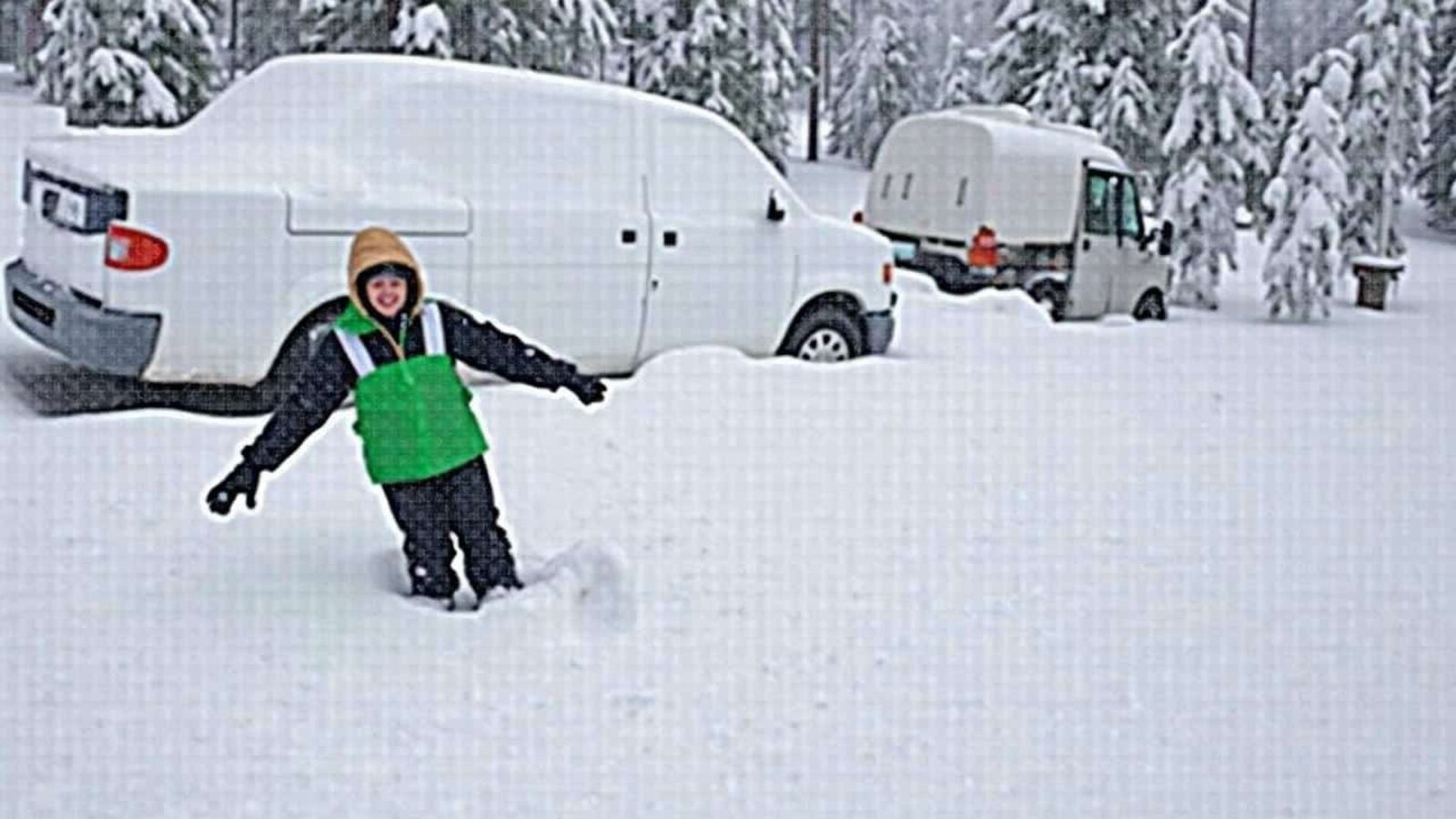
Imagine waking up to a world transformed overnight – streets blanketed in white, trees heavy with fresh powder, and the air crisp with the promise of winter’s full force. That’s the scene set for much of the United States right now, as a powerful snowstorm barrels across the Midwest and heads straight for the Northeast. Meteorologists have confirmed it: up to 30 cm (that’s about 12 inches) of snow could pile up in some spots, turning routine commutes into adventures and cozy nights into power-outage marathons. But here’s the real game-changer – it’s not just how much snow, but when it hits that will make or break your day.
This isn’t your average flurry. A massive low-pressure system is brewing, pulling in moisture from the Great Lakes to supercharge the flakes. We’re talking heavy, wet snow that sticks like glue and could weigh down power lines. If you’re in the path, from the heart of Minnesota to the hills of Vermont, now’s the time to stock up, salt your driveway, and check your snow shovel. In this guide, we’ll break it down simply: which states are in the crosshairs, when the snow will strike hour by hour, and easy steps to stay safe and sane. Whether you’re a first-time snow survivor or a seasoned nor’easter vet, we’ve got you covered with fresh updates as of today, November 30, 2025.
Why does timing matter more than totals? Picture this: A town 40 miles apart might get wildly different amounts – one buried under a foot, the other just a dusting – all because of how the storm’s bands sweep through. Roads could turn into skating rinks before dawn, or schools might close just in time for kids to build forts instead of homework. Stick with us as we map out this winter beast and arm you with what you need to handle it like a pro.
Why This Snowstorm Is a Big Deal for the Midwest and Northeast
Winter storms like this one don’t just drop snow – they disrupt everything from your morning coffee run to holiday travel plans. This system started as a whisper in the Plains but has roared to life, thanks to cold air clashing with warm, moist winds off the lakes. The result? A “bomb cyclone” effect that’s rare for late November but not unheard of in a warming climate where weather patterns get more extreme.
Experts from the National Weather Service are calling it one of the season’s first major events, with potential for black ice (that invisible slick layer on roads), downed branches, and even brief whiteouts where visibility drops to near zero. But it’s not all doom – fresh snow means cross-country skiing trails opening early and that magical crunch underfoot. The key? Preparation turns panic into productivity. By knowing the forecast inside out, you can dodge the worst and embrace the best of what winter offers.
For families, this means chatting about who shovels what and when. For drivers, it’s about gassing up now and avoiding peak chaos. And for everyone, it’s a reminder that Mother Nature doesn’t check your calendar. Let’s dive into the states feeling the freeze first.
Affected States: Where the Heaviest Snow Will Fall
Not every corner of the US is getting buried, but a wide swath from the breadbasket to the big apple is. The storm’s core hits hardest in the Upper Midwest, where lake-effect snow amps up the totals, then rolls east like a snowball gaining speed. Southern edges might see a slushy mix – think more mess than magic – while higher ground gets the full fluffy treatment.
Here’s the rundown of states most at risk, based on today’s latest models. We’ve focused on those with 10 cm (4 inches) or more expected, but even fringes could surprise with isolated dumps.
Snowfall Forecast by State (November 30 – December 1, 2025)
| State | Expected Snowfall | Key Areas Impacted | Why It’s Worse Here |
|---|---|---|---|
| Minnesota (MN) | 10–20 cm (4–8 in) | Twin Cities, northern regions | Cold front dives in first, fueling early bands |
| Wisconsin (WI) | 15–25 cm (6–10 in) | Milwaukee, Madison, lakefront | Great Lakes moisture adds extra punch |
| Iowa (IA) | 10–15 cm (4–6 in) | Northern counties | Transitional zone; slush possible south |
| Illinois (IL) | 10–20 cm (4–8 in) | Chicago area, northern suburbs | Urban heat might melt edges, but core gets hit |
| Michigan (MI) | 15–30 cm (6–12 in) | Lower Peninsula, UP edges | Lake enhancement turns it epic |
| Ohio (OH) | 15–25 cm (6–10 in) | Northern counties, Cleveland | Lakeshore boost for record locals |
| Indiana (IN) | 10–25 cm (4–10 in) | Northern half | Proximity to MI means spillover snow |
| Pennsylvania (PA) | 15–30 cm (6–12 in) | Northwest, Erie region | Lake Erie effect: Snow belts galore |
| New York (NY) | 10–25 cm (4–10 in) | Upstate, Buffalo, Adirondacks | Interior builds deep overnight |
| Vermont (VT) | 15–25 cm (6–10 in) | Green Mountains | Elevation traps the cold and flakes |
| New Hampshire (NH) | 15–25 cm (6–10 in) | White Mountains | Windy ridges pile it high |
| Maine (ME) | 10–20 cm (4–8 in) | Inland, away from coast | Coastal rain flips to snow surprise |
| West Virginia (WV) | 5–15 cm (2–6 in) | Higher elevations | Mountain snow, valleys get rain |
| Virginia (VA) | 5–10 cm (2–4 in) | Western mountains | Fringe effects; more ice than snow |
| Kentucky (KY) | 5–10 cm (2–4 in) | Eastern edges | Slushy mess in lowlands |
| Tennessee (TN) | Trace–5 cm (<2 in) | Eastern mountains | Light coating at best |
The big winners (or losers, depending on your snow-shoveling enthusiasm) for that full 30 cm? Look to northern Michigan, northwest Pennsylvania, and parts of upstate New York, where lake-effect magic multiplies the flakes. Southern states like Kentucky and Tennessee? More of a wintry mix – rain turning to sleet, then a light dusting to remind you it’s winter.
Hour-by-Hour Timing: When the Snow Hits Your Backyard
Timing is everything in a storm like this. Miss the window, and you’re golden; hit it head-on, and it’s time to hunker down. This beast unfolds in acts, starting west and marching east over 24–36 hours. Light flurries tease the edges late today (November 30), but the heavy stuff ramps up tonight.
Upper Midwest: The Opening Act (Late November 30 – Early December 1)
It kicks off in Minnesota and Wisconsin around 8–10 p.m. tonight. Flakes start light, like confetti from a winter party, but by midnight, bands thicken. Expect 10–15 cm by sunrise in the Twin Cities or Madison – perfect for that pre-dawn road slip-up. Heaviest rates? Between 10 p.m. and 4 a.m., when most folks are dreaming of eggnog. Iowa and Illinois join the fray a bit later, with Chicago seeing the worst from 1 a.m. to 8 a.m. Pro tip: If you’re up for Black Friday returns tomorrow, rethink it – plows won’t catch up till noon.
Great Lakes Slam: Michigan and Ohio Feel the Freeze (Overnight to Morning)
As the system crosses Lake Michigan, it supercharges. Northern Indiana and Michigan’s Lower Peninsula get walloped from 2 a.m. onward, with lake-effect bands dumping 5 cm per hour at peak. Northern Ohio and northwest Pennsylvania? Brace for your morning commute to be a white-knuckle ride – snow rates spike 6–9 a.m., turning interstates into parking lots. Erie, PA, could see 20 cm before lunch. Winds gusting 40–50 km/h will whip up drifts, burying cars under fluffy barricades.
Northeast Build-Up: New York to Maine (Morning to Late Night)
The storm doesn’t quit – it pivots. Western New York starts mid-morning December 1, with Buffalo’s infamous snow belts firing up. By afternoon, it thickens over the Adirondacks and Green Mountains in Vermont and New Hampshire. The real overnight punch hits interior New England: 8 p.m. to 4 a.m., stacking 15–20 cm while you sleep. Coastal Maine might dodge with rain early, but inland? Heavy wet snow by midnight. Metro spots south of the line, like Albany or Portland, flip from drizzle to dumps around evening rush hour.
In short: Midwest folks, batten down tonight. Northeast, your turn comes tomorrow evening. Track it with apps like Weather Underground for hyper-local alerts – because 10 minutes can mean 5 cm difference.
Simple Preparation Tips: Stay Safe Without the Stress
Prepping for snow doesn’t have to feel like prepping for the apocalypse. Focus on smart, simple moves 12–24 hours ahead – that’s today, folks! No need for a bunker; just enough to keep life humming.
Start with the basics: Top off your gas tank (half-empty becomes a problem fast) and charge every device, including that forgotten tablet. Hit the store for milk, bread, and eggs – not a month’s supply, just enough for a couple stuck-inside days. For pets or little ones, grab extra food and diapers now.
Outdoors? Sprinkle salt or sand on steps and your driveway before the first flake – it stops ice from bonding like superglue. Gather flashlights, batteries, and a lighter in one spot (kitchen counter works). Set phone reminders for trash bins and patio chairs – wind and snow bury them deep.
Indoors, it’s family huddle time: Assign shoveling shifts (kids love the “snow boss” title), refill prescriptions, and prep work calls in case Zoom’s your new office. One dry outfit by the door saves soggy midnight clears. And for power blips? A full water pitcher (for coffee or flushing) and backup phone charger are MVPs.
Driving? Only if you must – and pack a kit with blanket, snacks, and scraper. The riskiest hours are those intense bands when visibility tanks and temps hover at freezing. Stay off roads then; let pros with plows lead the way.
Remember, the goal’s calm, not chaos. A little planning now means more cocoa-sipping later.
What Happens After the Snow: Digging Out and Moving On
Once the flakes fade (likely by midday December 2), the real work begins – but so does the fun. Shovel in layers to avoid backaches, starting from the top down. Clear around your car first, then paths to doors. Roads will narrow with berms (those plow-pushed piles), so drive slow and signal early.
Schools? Expect closures or delays in heavy-hit zones – check district apps tonight. Flights out of O’Hare or LaGuardia? Delays galore; rebook if you can. And power? If lines snap, crews prioritize mains first – patience pays.
On the bright side, this snow refreshes reservoirs and sets up ski seasons. Bundle up for neighborhood walks; the quiet post-storm hush is pure poetry. If outages linger, community centers often open as warm spots.
Conclusion: Embrace the White Wonderland – You’re Ready
This 2025 snowstorm – up to 30 cm strong – is a reminder of winter’s wild beauty and bite. From Minnesota’s early onslaught to Maine’s midnight mound, the list of affected states is long, but so is your power to prepare. By tuning into timings, stocking smart, and staying flexible, you’ll weather it like a champ. It’s not about beating the snow; it’s about dancing in it. Stay warm, stay safe, and here’s to fresh tracks tomorrow. For live updates, follow @NWS or your local forecast. Winter’s just getting started – what’s your first snow-day plan?
FAQ: Quick Answers to Your Burning Snow Questions
Q: Which US states are most likely to get near 12 inches of snow from this storm?
A: The top spots for 25–30 cm include northern Michigan, northwest Pennsylvania, northern Ohio, upstate New York, Vermont, New Hampshire, and inland Maine. Minnesota and Wisconsin are close behind with 15–25 cm.
Q: When does the snow start in the Midwest today?
A: Light snow teases late afternoon or evening on November 30, but the heavy bands crash in overnight – think 10 p.m. to 6 a.m. December 1, right before rush hour.
Q: How about timing for the Northeast – will it hit during the day?
A: Yes, building from morning in western New York, peaking evening to overnight December 1. Many will wake to the bulk on December 2.
Q: Should I worry about power outages with this one?
A: Possibly, especially in rural or wooded areas – heavy wet snow plus gusts can topple lines. Stock flashlights, batteries, and a portable charger just in case.
Q: Is driving safe during the peak snow?
A: Not ideal – avoid it if possible during heavy bands (low visibility, ice buildup). If you go, slow speeds, full lights, and an emergency kit are non-negotiable.
Q: What’s new with today’s forecast update?
A: As of November 30, 2025, models show slightly higher totals near the Great Lakes due to enhanced moisture. Coastal New England now has a better shot at flipping to all snow. Check hourly for shifts!